

Tokyo Weather in January
January is the center month of Tokyo’s winter, when the temperature drops to its lowest in a year; however, for most visitors, the weather is not very cold with a lowest temperature of above 0 degrees Celsius (32 degrees Fahrenheit). First snow is likely to occur in the month, but the total precipitation is low on the whole. New Year celebrations are good opportunities to experience Japanese culture; just make early reservations for flight and hotel, and pay attention to the crowds and higher prices.
 See also: Japan Weather in January
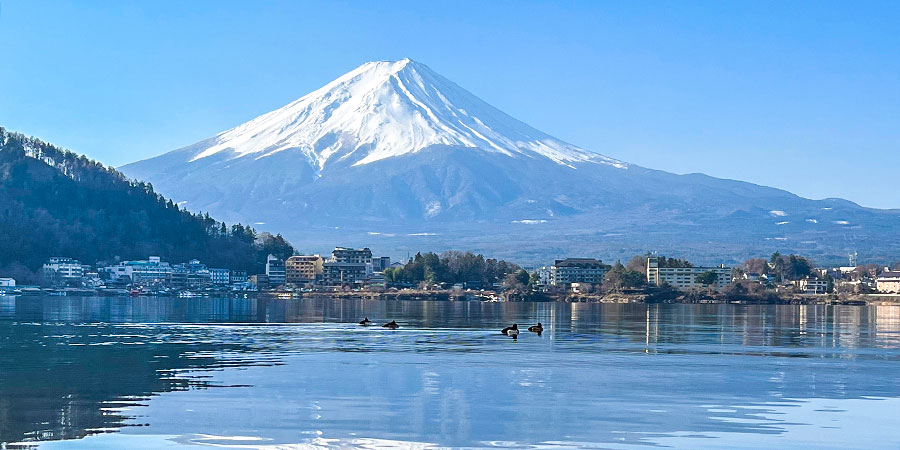
Mount Fuji with Snow Cap
|
Cold but not chilly
Mostly, the temperature is above 0℃ (32℉) even in coldest January. When a strong cold wind blows over, you may feel chilly. The actual temperatures during the daytime often fluctuate between 6 – 11℃ (42.8 – 51.8℉), which feels less cold, especially when the sun shines. In the shade where strong wind blows, the perceived temperature is a little lower. After the sun sets, temperatures decrease to around 1 – 5℃ (33.8 - 41℉) and hardly below 0℃ (32℉). Historically, the lowest temperature was -2℃ (28.4℉), but such a value is not common.
Seldom rainfall and snowfall
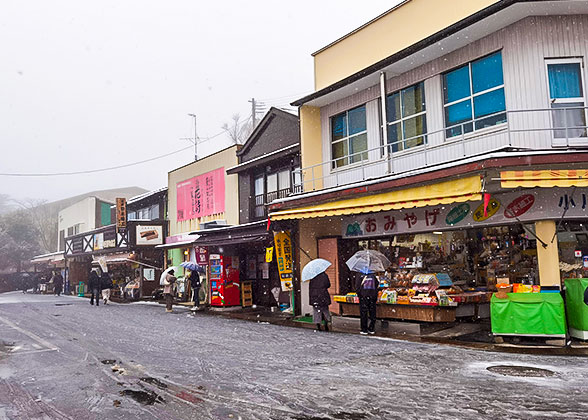
The city experiences 1 - 2 snowfalls in January, but it often snows lightly and lasts for a short period each time. Especially in downtown, the snowflakes melt immediately as they fall to the ground, so it’s not common to see snow cover. The first snow takes place in the first half of the month in most years.
It seldom rains, either. The total precipitation is only 53 mm (2 in) distributed over 4 days. As a result, the air humidity of Tokyo drops to its lowest in a year in January, only 44% on average, demonstrating a dry climate.
Short daylight but rich sunshine
In January, the sun rises at 06:42 - 06:53 and sets at 16:39 - 17:08, creating a daylight of 10.1 hours. If you want to visit the city thoroughly, you should better speed up your whole trip.
Luckily, sunny weather dominates the month: over 20 days are sunny or cloudy, bringing 6 hours of sunshine per day.

Is January a Good Time to Visit Tokyo?
January is not a bad time to visit Tokyo. You can choose whether to go or not based on the following pros and cons:Pros
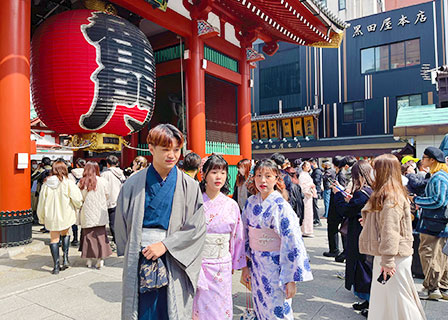
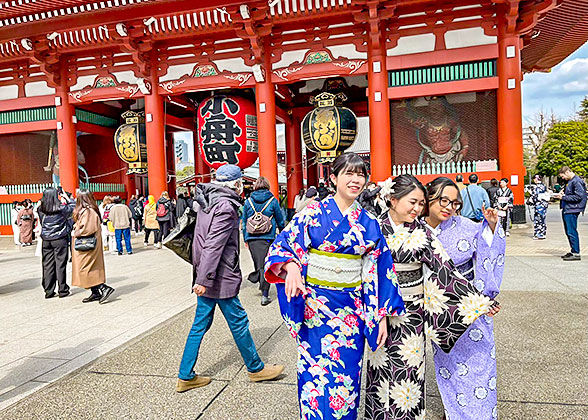
1. Not bad climatic conditions: It’s not chilly on the whole, and sunny weather brings clear blue sky to visitors, which serves as a beautiful background for taking pictures.2. Unique cultural experience on New Year’s Day: You can pay the First Visit to Meiji Jingu Shrine, Senso-ji Temple, and other popular destinations like locals do to pray for peace and good health.
3. Low tourist season after the New Year: When the crowds disperse, you can visit popular attractions at a low pace without queueing up for a long time. Also, you can enjoy relatively lower prices, as it enters the cheapest period to visit Tokyo. Big discounts are offered on many goods during the unmissable New Year sales.
4. It’s a best time to appreciate Mount Fuji with a snow cap. There are over 20 full visibility days.
|
|
|
Cons
1. Negative effects brought by the tourist peak during the New Year: It is difficult to get a hotel or bullet train ticket on site without prior booking, and you have to spend more time and money on transportation and dining.2. Most museums, including Tokyo National Museum, are temporarily closed during the New Year. The same is true of many local restaurants.
3. In the face of short daylight, you have to limit your sightseeing time for most attractions and follow a tight timetable.
4. There are rare natural scenes worth viewing.
How to dress for Tokyo in January

|
The heating system makes the city another world, and you may be sweaty on the metro train or buses if you are wrapped in your clothes thickly.
Inner layer: It’s proper to wear a bottoming shirt and a thin knitwear or hoodie, which fit the indoor temperatures and doesn’t make you embarrassed when they are shown up. Long johns are advised for people afraid of the cold.
Outer layer: Put on a down coat for outdoor sightseeing. Thick jeans or sweatpants are needed for the bottom.
Shoes: You can wear a pair of normal sneakers with warm socks; walking boots are an alternative. Snow boots are not needed.
Accessories: A scarf is useful to deal with the blowing wind. Besides, remember to pack lipsticks and moisturizing cream. Masks are also necessary because the flu virus is often active in January.
Travel recommendations for Tokyo in January
What to eat in Tokyo in January
Ryogoku Kokugikan - New Year’s sumo event
If you are a sports fan, don’t miss the New Year sumo tournament during January 11 – 25 at Ryogoku Kokugikan. Its tickets are available since December 6, 2025. Remember to book early.
Experience Hakone onsen
It’s a nice option to experience hot springs when you feel tired after a fulfilling day trip in cold January weather. Hakone near Tokyo has seven popular hot spring areas, with Hakone Yumoto Onsen as the biggest. Bathing in an open-air Hakone onsen, visitors can see the scenery of Mount Fuji clearly.
Travel tips for Tokyo in January
1. For those sensitive to low temperatures, it is advisable to travel around during the warmer 10 am – 3 pm.2. Make reservations for flights / bullet trains and hotels early if you plan a trip to Tokyo during the 2027 New Year, for fear that you fail to get one or have to pay more.
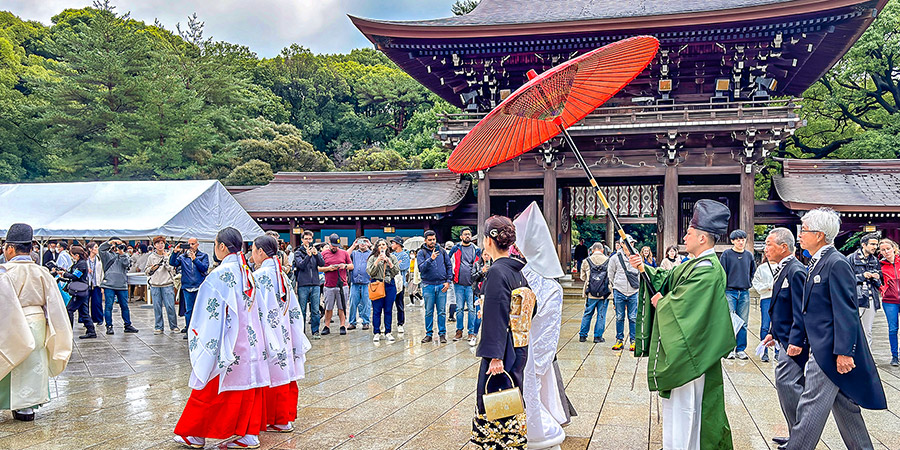
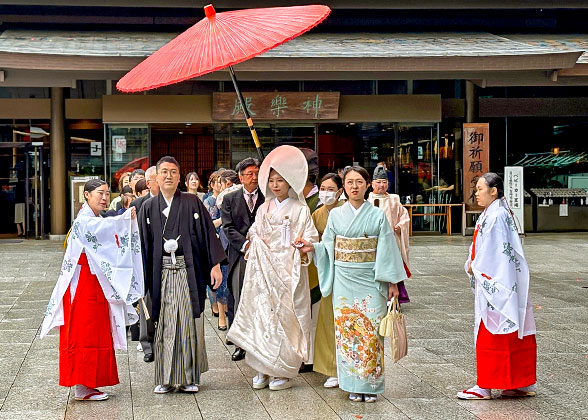
Wedding in Meiji Jingu Shrine
|
3. Most attractions adopt a winter timetable due to short daylight. They may stop ticket checking early at 15:30 - 16:00, so be sure to plan your itinerary well in advance.
Tokyo Weather by Month