


Thailand Weather
Thailand is located on the Indochinese Peninsula and has a tropical monsoon climate. Though hot year-round, it is not always scorching. Generally, it is divided into three seasons: the hot season from March to May when the heat is intense; the cool season from November to February, which as the name indicates, is comparatively cool; and the rainy season from June to October, when majority of the annual rainfall, about 80%, falls.
Temperature
Thailand has a relatively high temperature throughout the year with an overall small temperature difference. However, due to its north-south span of over 1,600 kilometers (994 miles), there are still some climatic differences among different regions.For instance, during the cool season, the low temperature in the central regions like Bangkok can be 7 to 10 degrees Celsius (45 to 50 degrees Fahrenheit) higher than in the northern areas such as Chiang Mai. This means that in Bangkok, it is comfortable to take a stroll in the morning and evening wearing just a t-shirt, while in Chiang Mai, if you don’t add a light jacket, you will feel a little chilly.
Which is the coldest month in Thailand?
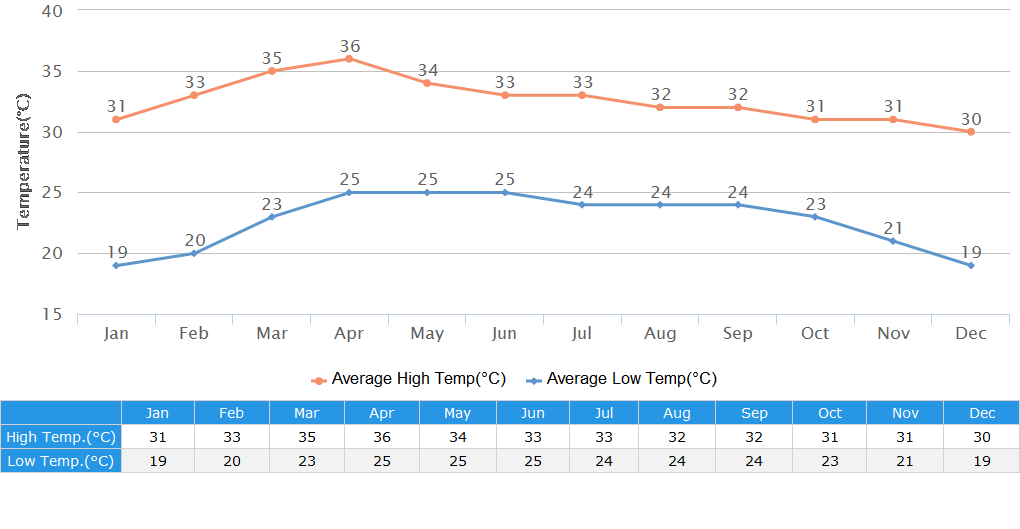
December is the coldest month of the year in Thailand. Although the daytime temperature often exceeds 30℃ (86℉), making it feel rather hot, the coolness is obvious in the early morning and evening. For instance, in Chiang Mai, the daytime highs during this period remain between 25 and 31℃ (77 - 88℉), while the nighttime lows drop to 13 - 21℃ (55 - 70℉). The significant diurnal temperature variation creates a climate contrast akin to two distinct seasons: it’s still hot summer during the day, but turns into cool autumn in the early morning and evening.It is noteworthy that, aside from December, the remaining months of the cool season- November, January, and February- also feature a relatively cooler climate. Even in Phuket - the southern region - the maximum temperature typically remains below 34℃ (93℉). A gentle sea breeze accompanies coastal walks, making you feel comfortable.
Which is the hottest month in Thailand?
April represents the hottest month of the year in Thailand, with scorching heat throughout the country. In Bangkok, for instance, minimum temperatures during this period range from 25 to 28℃ (77 - 82℉), while maximum temperatures typically reach 33 to 38℃ (91 - 100℉), with frequent occurrences of extreme heat exceeding 40℃ (104℉). Under such weather conditions, you will be drenched in sweat after being outside for just a short while.
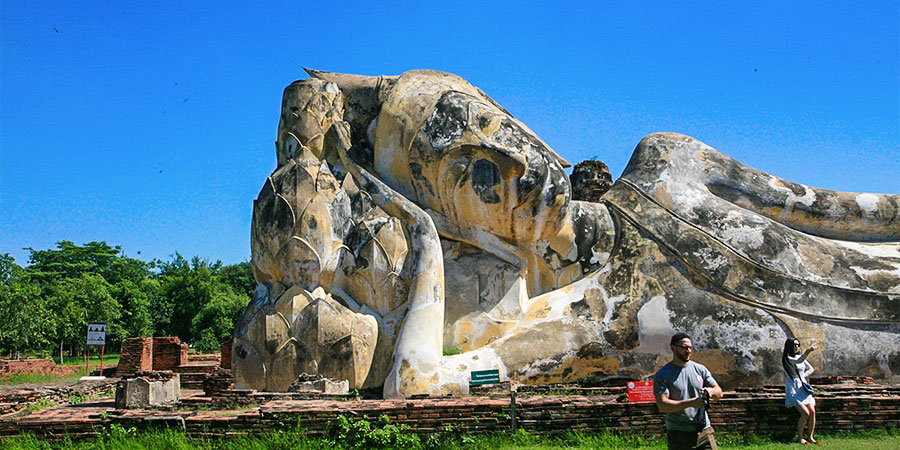
Wat Lokayasutharam Under Sun
|
Moreover, the heat in March and May during the hot season is similarly unbearable. For example, in Chiang Mai, the lowest temperature remains at 24 to 27℃ (75 - 81℉), while the highest temperature soars to 32 to 37℃ (90 - 99℉). In such weather, you simply don’t want to step out of the air-conditioned room even for a moment.
Precipitation
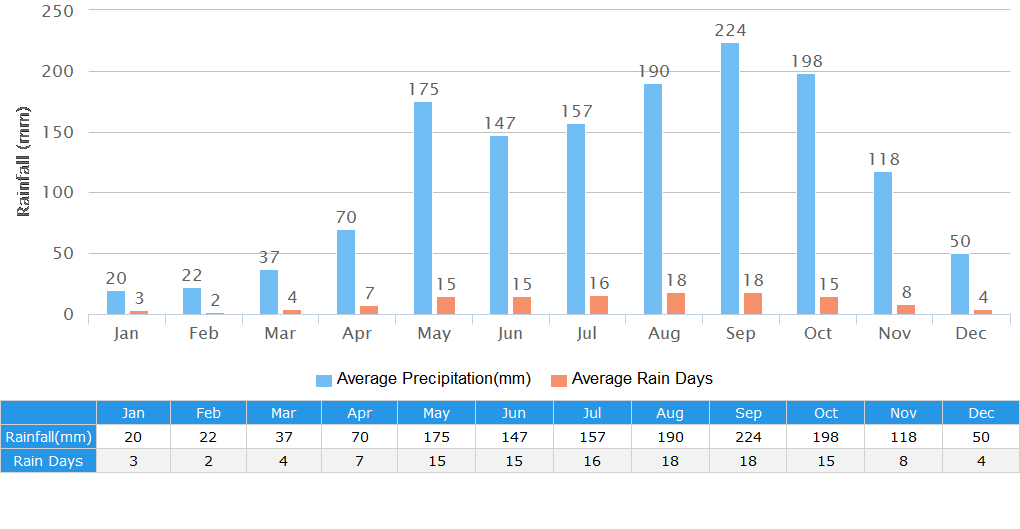
Influenced by the monsoon climate, the annual precipitation in Thailand exceeds 1,400 mm and the number of rainy days is over 100.Rainy Season in Thailand
The rainy season in Thailand mainly lasts from June to October, during which the average monthly rainfall generally exceeds 150 mm and the number of rainy days per month is over 15. The precipitation is mostly convective rain in the afternoon, characterized by short duration, high intensity and strong locality: often, it is sunny at noon, but a torrential downpour suddenly occurs in the afternoon, with the road instantly flooded like a stream; even a peculiar scene of sunny on one side of the street and rainy on the other can occur.
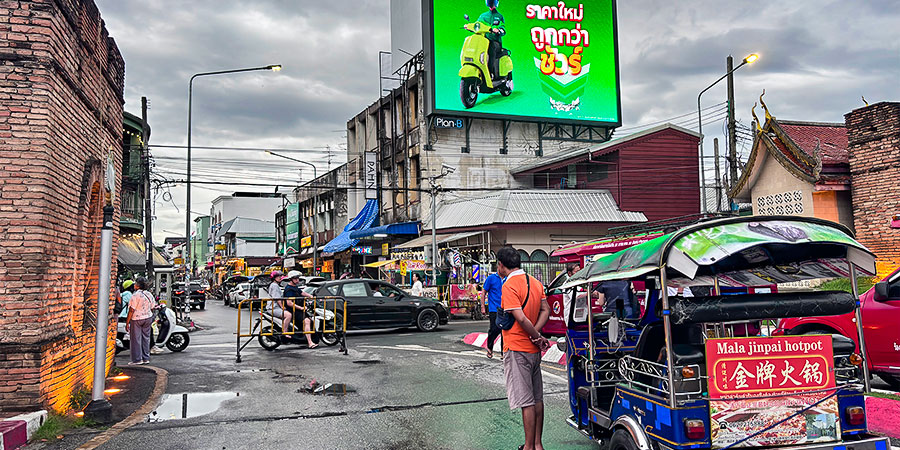
Chiang Mai Streets After Rain
|
Does Thailand Get Typhoons?
Thailand may be affected by typhoons, with two typhoons recorded in 2023, five in 2024 and four in 2025. The active period is from July to November, with September and October being the most active. Typhoons in Thailand usually do not bring extreme winds, but they are prone to trigger intense rainfall events. A typical example is Typhoon Wipha in July 2025, which resulted in accumulated rainfall exceeding 1,400 mm in southern Thailand, leading to widespread flooding.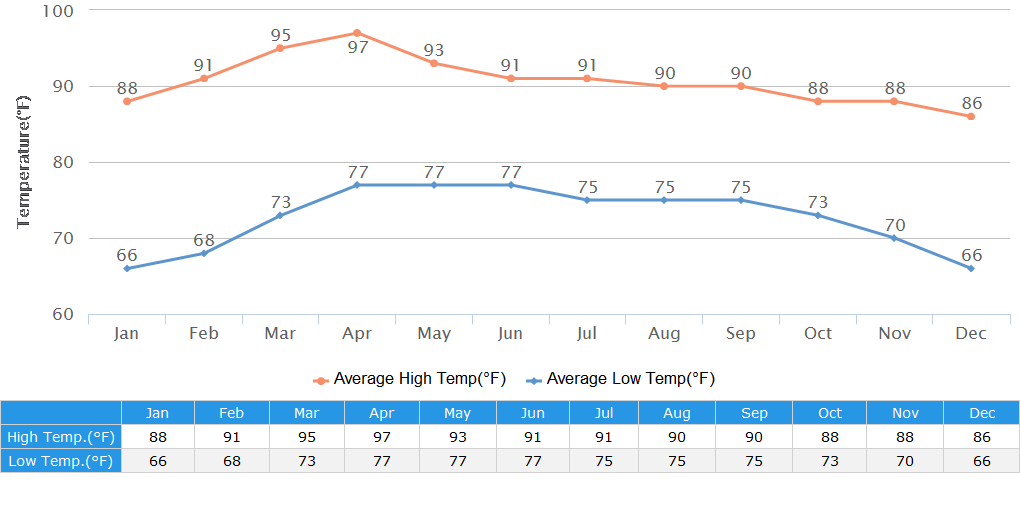
Best Time to Visit Thailand
The cool season is the ideal time to visit Thailand. On one hand, scorching heat is nearly nowhere to be found. In Bangkok, midday temperatures rarely exceed 35℃ (95℉), while mornings and evenings are pleasantly mild, hovering between 20 - 26℃ (68 - 79℉) - air conditioning isn’t even necessary for a comfortable night’s sleep. On the other hand, precipitation is scarce, with only around 5 rainy days per month and average monthly rainfall principally staying below 50 mm, ensuring outdoor itineraries being seldom affected by rain.
Weather of Thailand by Region
Northern Thailand: Chiang Mai, Chiang Rai, and etc.
Due to the comparatively high latitude, the distinctions among the three seasons in northern Thailand are especially pronounced. The cool season offers the most pleasant climate, with relatively dry and cool weather that is ideal for outdoor activities such as hiking, visiting ancient temples, and zip-lining through the jungle. However, when the hot season arrives, temperatures soar sharply, often exceeding 38℃ (100℉) in the midday, making prolonged stay outdoors challenging. During the rainy season, rainfall is abundant, with most of the precipitation occurring as short but intense showers, and landslides may occur in mountainous areas, causing some disruptions to mountain trips.
Note: From January to April, northern Thailand experiences burning season. The haze produced by the practices is hard to disperse, causing a sharp increase in PM 2.5 concentration and leading to persistent air pollution and a significant drop in visibility. However, when the rainy season arrives in May, the rain will suppress the burning activities and the air quality will gradually improve.
See more about Chiang Mai Weather

Zip-lining in Chiang Mai
|
Central Thailand: Bangkok, Ayutthaya, Hua Hin, and etc.
The central region lies within the Chao Phraya River Plain, characterized by low-lying, flat terrain and adjacent to the sea. Consequently, seasonal transitions are gradual, without the significant temperature contrasts seen in the north. However, due to high moisture from the ocean and the amplifying effect of urban heat islands, cities such as Bangkok experience a notably oppressive muggy sensation, akin to a sauna. In coastal cities such as Pattaya and Hua Hin benefiting from the regulating effect of sea breezes, the climate is more comfortable. The rainy season is also characterized by intense showers that come and go quickly, generally not affecting sightseeing a lot.
See more about Bangkok Weather
Southern Thailand: Phuket, Ko Samui, and etc.
Southern Thailand is surrounded by the sea, with temperatures mostly remaining stable between 25 and 32°C (77°F - 90°F) year round. The region has two distinct seasons: the dry season, from November to April, and the rainy season, from May to October. During the dry season, weather conditions are predominantly sunny with minimal rainfall, and seawater is clear, making it the peak period for various water-based activities. In contrast, the rainy season is characterized by frequent, brief, intermittent showers and stronger sea breezes, which may affect diving and other marine excursions. Notably, the eastern coast exhibits special climatic characteristics due to the influence of the northeast monsoon, with the highest rainfall typically occurring between October and January.
See more about Phuket Weather

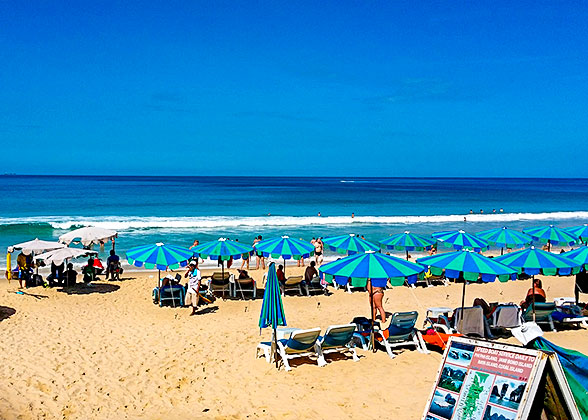
Phuket Beach
|
What to Bring
Clothes & Shoes: Mainly pack breathable short-sleeved T-shirts, shorts, thin long pants, dresses, and sun-protective clothing as your daily essentials. For trip to the northern part in the cool season, add a windbreaker and jeans to keep warm during chilly mornings and evenings. As for footwear, ordinary sports shoes are fine for daily outings, while sandals or slippers are more practical choices for the rainy season. Note that when going to a coastal city, bring your swimsuits and beach shoes.
Others: Mosquito repellent should be kept on hand throughout the year. Also, bring high-SPF sunscreen, a sun hat, and a portable fan for sunny days; and an umbrella, a raincoat, and a waterproof phone pouch for rainy days.
Travel Tips
1.In the cool season, northern regions experience a significant diurnal temperature variation, increasing the risk of catching a cold. Therefore, it is recommended to carry common medicines such as cold medicine and antipyretics with you. In addition, no matter what season it is, the air conditioning in indoor places is very strong, so it is recommended to carry a light jacket with you.
2.When traveling in the hot season, it is advisable to avoid outdoor exposure during the peak heat hours of 11:00 to 15:00. Drink plenty of water daily and keep electrolyte drinks on hand to prevent dehydration.
3.The roads are slippery on rainy days, so it is recommended to wear anti-slip shoes when visiting temples or walking through the jungle to prevent falls. After the rain, stay away from power poles to avoid electric shock and be careful of hidden potholes on the road to avoid tripping hazards.
4.From July to November, keep a close eye on the weather forecast and try to avoid the days when typhoons are predicted to hit.
You May Like
-
 7 Days Private Tour to Bangkok - Phuket - Khao Sok - Phuket from USD1327
 -
 10 Days Private Tour to Thailand, Highlighted by Bangkok - Ayutthaya - Chiang Rai - Chiang Mai - Phuket from USD2111
 -
 12-Day Thailand Private Tour with Bangkok - Kanchanaburi - Ayutthaya - Lopburi - Sukhothai - Chiang Mai - Chiang Rai - Phuket from USD2304