

Osaka Weather
Osaka has a subtropical monsoon climate with four seasons: spring from March to May, summer from June to August, autumn from September to November, and winter from December to February.The westward Seto Inland Sea makes the weather of Osaka relatively mild and comfortable, and the city typically experiences no intense heat in summer or severe cold in winter. In spring and autumn, suitable weather conditions make cherry blossoms and red foliage impressive.
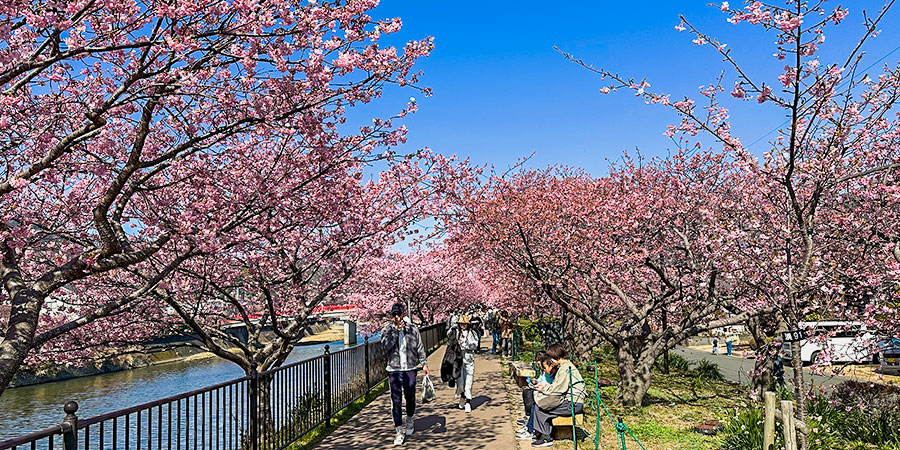
Impressive Cherry Blossoms in Osaka
|
Temperature
Hottest Month of Osaka: August
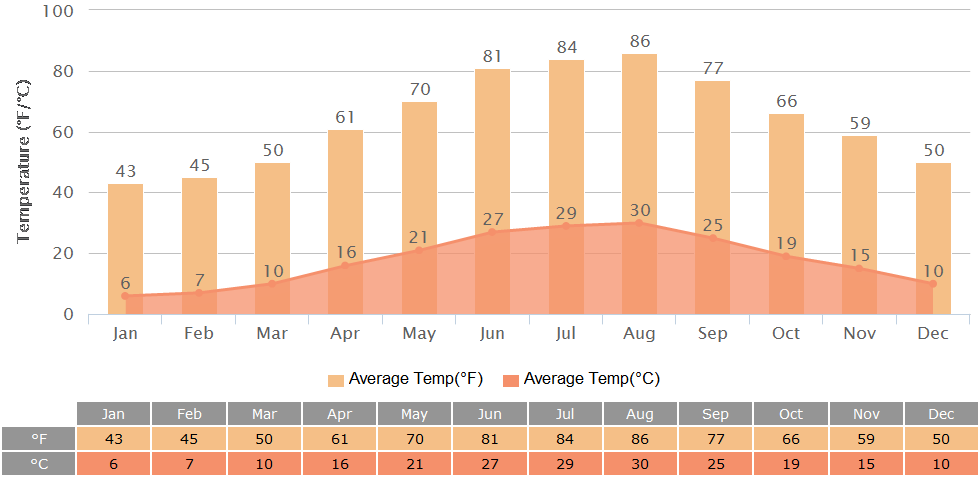
August in summer is seen as the hottest month of Osaka, with the temperature being from 27 to 33°C (81 to 91°F). Based on historical data, there are usually about 28 days on which the highest temperature is over 30°C (86°F). Besides, this month, it is common for daily high temperatures to reach around 3535°C (95°F) for five consecutive days or more.Coldest Month of Osaka: January
In January, Osaka experiences the coldest period throughout the year, with the daytime and nighttime temperature of 5-10°C (41-50°F), and 0-5°C (32-41°F), respectively. Even in this month, the temperature seldom decreases below 0°C (32°F), the freezing point, so you basically won’t feel frigid and road surfaces are rarely icy.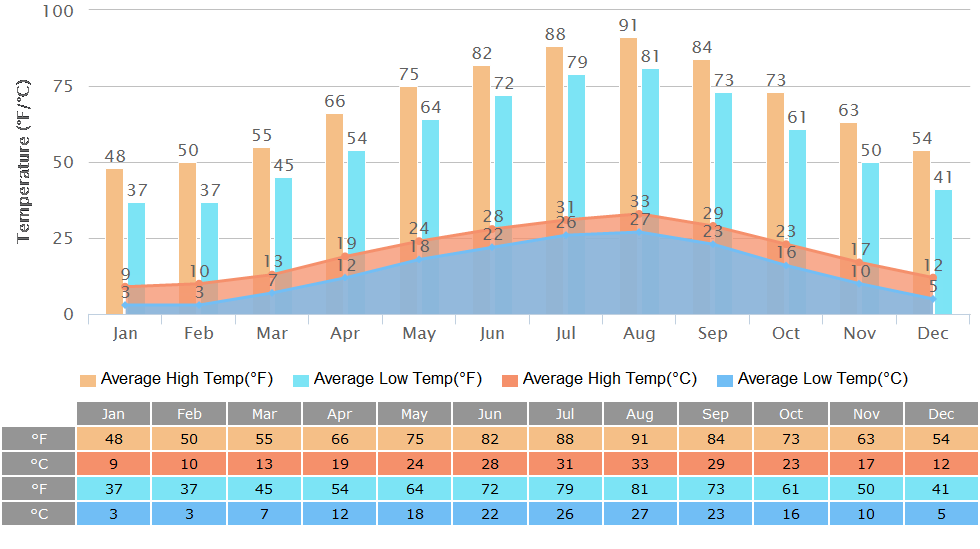
Precipitation
Precipitation of Osaka is high in summer and low in winter. Due to the action of the southeast monsoon, the city has its plum rain season from early June to mid-to-late July, during which rain can happen in successive days. As for forms of precipitation, rain can fall in all four seasons, and snow may occur in winter.Rainiest Month of Osaka: June
As mentioned above, early June to mid-to-late July is usually the rainy season of Osaka. So, almost the entire month of June is quite rainy, and this month is the only one with the average precipitation over 200 mm in a year, and it thus becomes the rainiest month of the city. Plus, days with precipitation are the most in this month, which are about 12 averagely.Typhoon Season of Osaka: June to October
In these months, August and September make up the peak time when Osaka is more likely to be affected by typhoons. But on the bright side, the situation of a strong typhoon directly striking Osaka is not very common. Most of the time, it may be affected by the periphery of a typhoon, when the city will be in bad weather conditions such as strong winds and downpours for several days. In these situations, Shinkansen trains may be suspended.Does it Snow Much in Osaka?
Not really. Snow usually happens in January and February for a few times totally, and its intensity is generally not very high, and duration is not so long either. In general, fleet and light snow are the two main forms of snowfall. In view of the mostly 0°C-above (32°F) temperature, snow basically doesn’t accumulate in the city, so people’s tour won’t be quite inconvenient.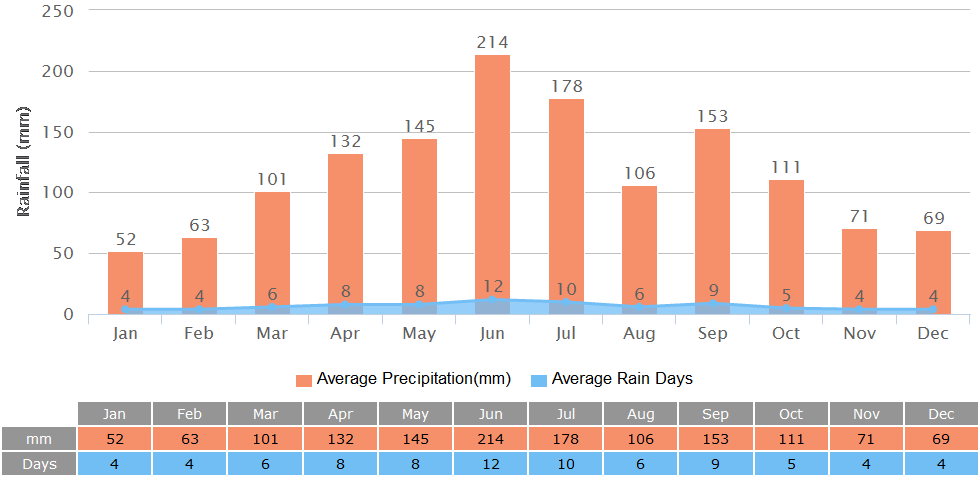
Humidity
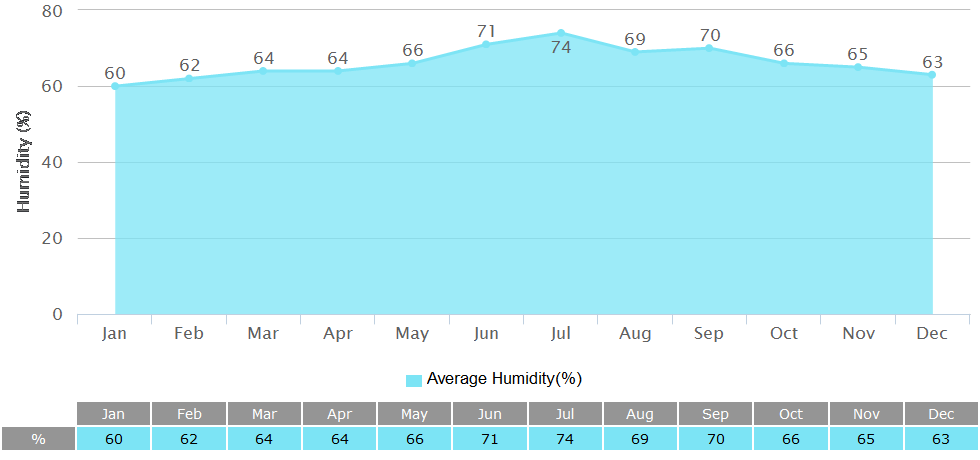
Due to the inland-sea-adjacent position and seasonal variations in precipitation, the climate of Osaka also varies in different seasons. In summer from June to August, monthly average humidity is high from 69% to 74%, which makes people feel sticky in hot weather. In winter with the least precipitation in a year, the climate is comfortably dry, with the average humidity just slightly over 60%.
Length of Day & UV Index
The longest daytime of Osaka has a duration of about 14.5 hours in mid-to-late June, and the shortest daytime for about 9 hours and 50 minutes happens around December 22. Daily sunshine duration lasts from 5 to 7 hours on average in a year. The UV index of Osaka is over 6 from March to October, and reaches the highest value of 11 in July. In view of these, it’s quite necessary to keep sun-protection on sunny days in spring and autumn, and prevent sunburn in summer.Best Time to Visit Osaka
Spring months from March to May, and also October and November in autumn, compose the best time to visit Osaka. The climate of Osaka is pleasantly warm in spring and mildly cool in October and November, ideal for traveling around ancient sites, snack streets, and shopping malls in the city. In terms of natural scenery, delicate Sakura from March to April and red foliage in late November are two unmissable highlights in the entire year of 2026 in Osaka.
 Read more: Best Time to Visit Japan & Japan Weather
You can click to see our Japan Tours if you have decided to visit Osaka in 2026.
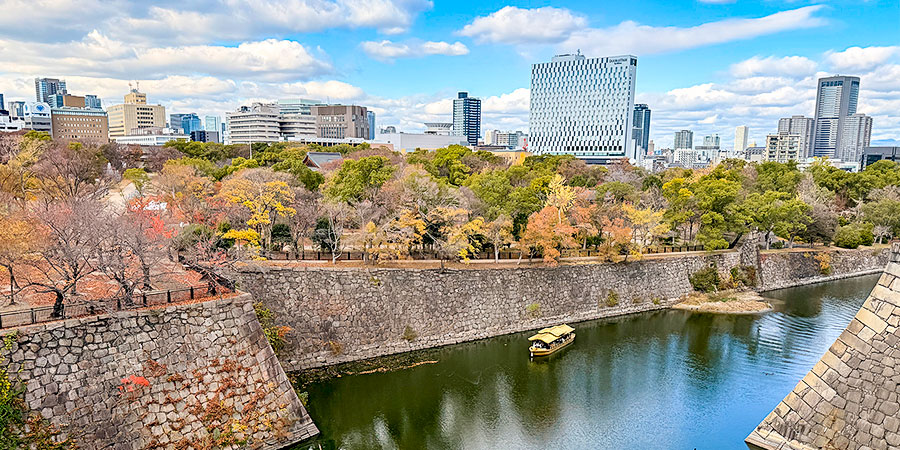
Colorful Autumn View in Osaka
|
Osaka Climate by Month – Clothes and Travel Advice
Spring from March to May
Climate Overview
Packing List
In early spring, pack thicker clothes such as a sweater, a lightweight down jacket, long johns, and jeans. In mid-to-late spring, long-sleeved shirts, a thin knitted sweater, a wind coat, and jeans are more suitable. For shoes, choose among leather boots, sneakers, and flats.Best Things to Do
1. Admire Sakura in the Osaka Castle Park and on the Sakura Street of Japan Mint.2. Warm and breezy weather provides good conditions for a city walk, and iconic Tsutenkaku is a must-go place. You can not only enjoy the modern view of Osaka on the observation deck, but also enjoy delicious Japanese food like okonomiyaki around it.
3. In addition to enjoying sightseeing in the downtown area, the pleasant weather further makes it suitable to visit the Port of Osaka. Besides, taking a Santa Maria Cruise is also a good way to enjoy the port view.
Read more: Best Places to See Sakura in Osaka & Cherry Blossom Season in Japan
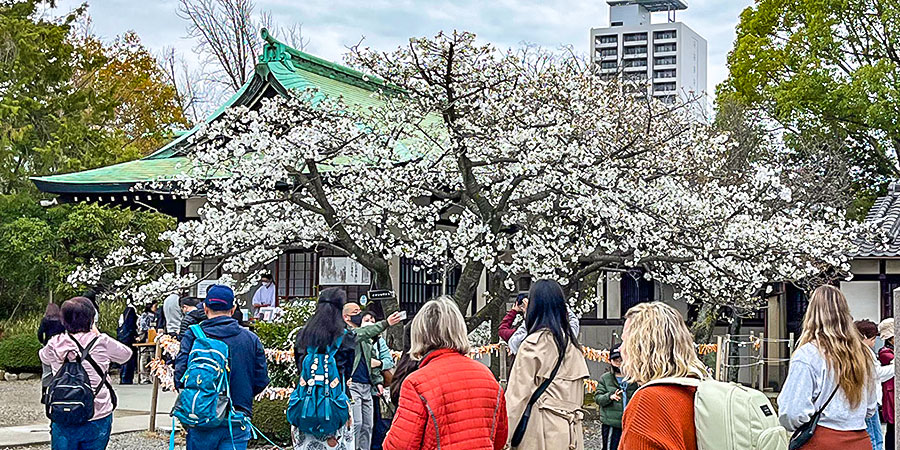
Blooming Sakura in Osaka Castle in Spring
|
Summer from June to August
Climate Overview
Packing List
Clothes: Short-sleeved shirts, shorts, skirts, and shirts.Shoes: Breathable sneakers / flats, or sandals.
Others: Sun-protective items and rain gear.
Best Things to Do
1. Watch celebrations of the Tenjin Festival, one of the three major festivals in Japan. On the night of July 25, a fireworks show and a boat procession are held together.2. On muggy days, indulge yourself in fresh coolness in the Minoo Park, featuring a great waterfall and green maple leaves.
3. Night tour activities are popular in the hot summer. In Dotonbori and Shinsaibashi, probably the most active areas of Osaka, you will find the unique charm of the city under the illumination of neon lights.
4. Visit the ancient Sumiyoshi Taisha Shrine with many buildings providing shade, and watch a traditional Japanese wedding ceremony within.
Travel Tips
1. In view of mostly uncomfortably hot and humid weather in this season, it’s suggested to flexible arrange your itinerary. For example, you can set your sightseeing activities in the relatively cooler early morning and late afternoon, and also at night, and have a short break around hot noon.2. To reduce inconvenience brought by the rainy season or a typhoon to your tour, it’s necessary to check weather conditions before you set off, and be prepared to cope with the unpleasant weather conditions.
Read more: Best Things to Do in Osaka at Night & Everything You Need to Know about Rainy Season in Japan
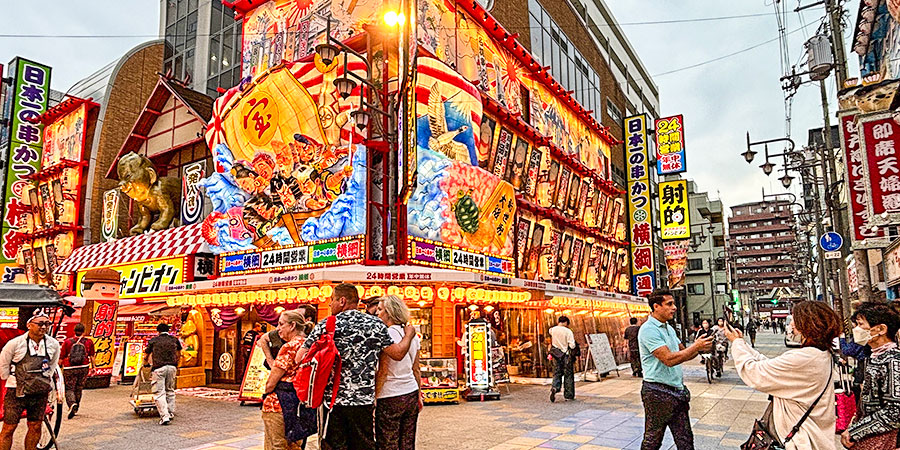
Shinsekai Street Scene in Summer
|
Autumn from September to November
Climate Overview
Packing List
Thin and quick-dry clothes and sandals are still suitable in September. As it’s cooler in October and November, recommended clothes include a long-sleeved shirt, a hoodie, an overcoat, and sweatpants / jeans. For shoes, wear sneakers or comfortable flats.Best Things to Do
1. Admire autumn foliage in the Osaka Castle Park, the Katsuō-ji Temple, the Minoo Park, and the Expo’70 Commemorative Park.2. Visit the Hozenji Yokocho, and feel the sharp contrast between tranquility here and hustle and bustle in the nearby Dotonbori.
3. Take the Tempozan Giant Ferris Wheel in clear autumn, and get a panoramic view of the city and the Seto Inland Sea.
Read more: Best Places to See Autumn Foliage in Osaka & Japan Fall Foliage Forecast
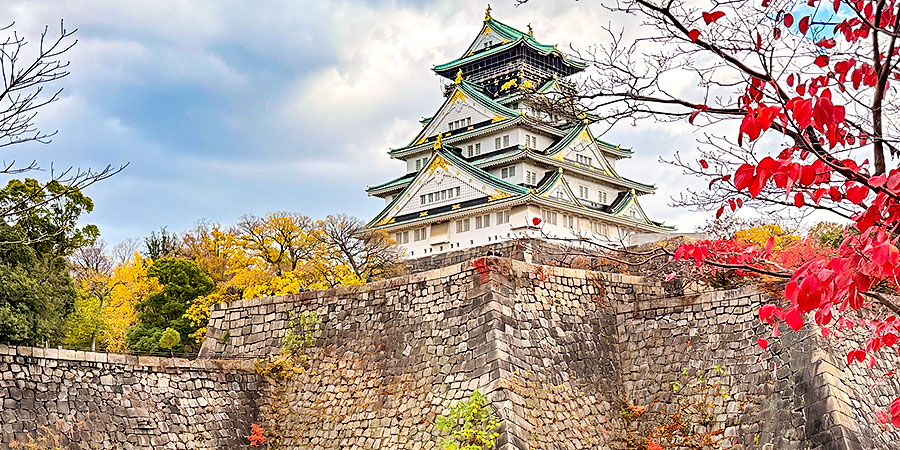
Autumn Foliage View in Osaka Castle Park
|
Winter from December to February
Climate Overview
Packing List
Thermal underwear, a sweater, and a down jacket as tops, and thermal leggings and windproof pants as bottoms. To keep feet warm, wear high-top boots.Best Things to Do
1. View active aquatic animals in Osaka Aquarium Kaiyukan in the morning, a warm and indoor attraction.2. Sunny noon is the best time to visit some outdoor attractions, such as Namba Yasaka Shrine, and photograph its unique lion-head-shaped entrance.
3. To avoid winter cold in the evening, you can visit the indoor Kuromon Market, kitchen of Osaka, to taste snow crab, which is the most delicious in this season.
4. After all-day-long sightseeing in the relatively cold environment, taking a Onsen, Japanese hot spring bath, is a good way to relax and stay warm.
Read More: Best Places to Go Shopping in Osaka & Osaka Festivals
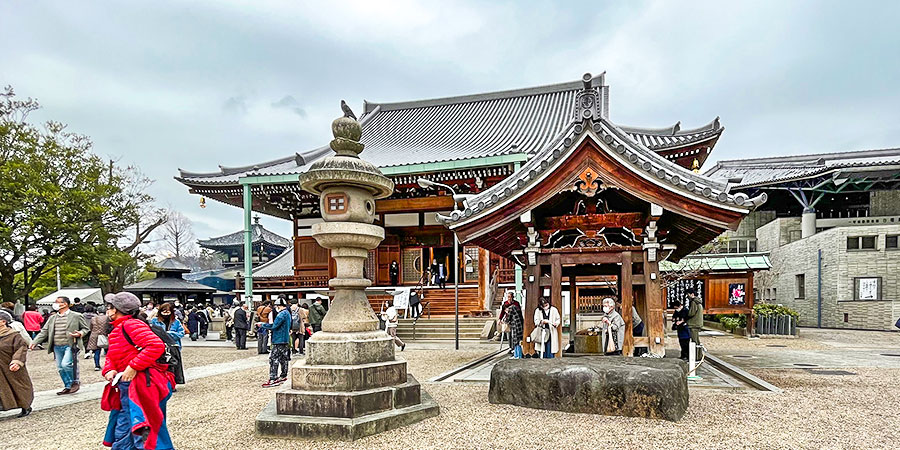
Osaka Isshinji Temple in Winter
|
You May Like
-
 8 Days Mini Group Tour: Tokyo - Hakone & Mt. Fuji - Kyoto - Nara - Osaka - Hiroshima - Osaka from USD2771
 -
 13 Days Japan Private Tour of Tokyo - Kamakura - Mt. Fuji - Kyoto - Nara - Hiroshima - Osaka from USD4443
 -
 7 Days Mini Group Tour with Highlights in Japan: Tokyo - Mt. Fuji - Kyoto - Nara - Osaka from USD2155