


Nara Weather
Nara has an inland temperate monsoon climate with relatively mild temperatures and moderate total precipitation year-round. There are four distinct seasons: spring brings rising temperatures but significant day-night variations, and moderate rainfall; summer features high temperatures and rainfall, causing a muggy climate; autumn offers comfortable temperatures and clear skies; winter is relatively cold with mostly sunny and dry weather conditions.
Lovely Deer in Nara
|
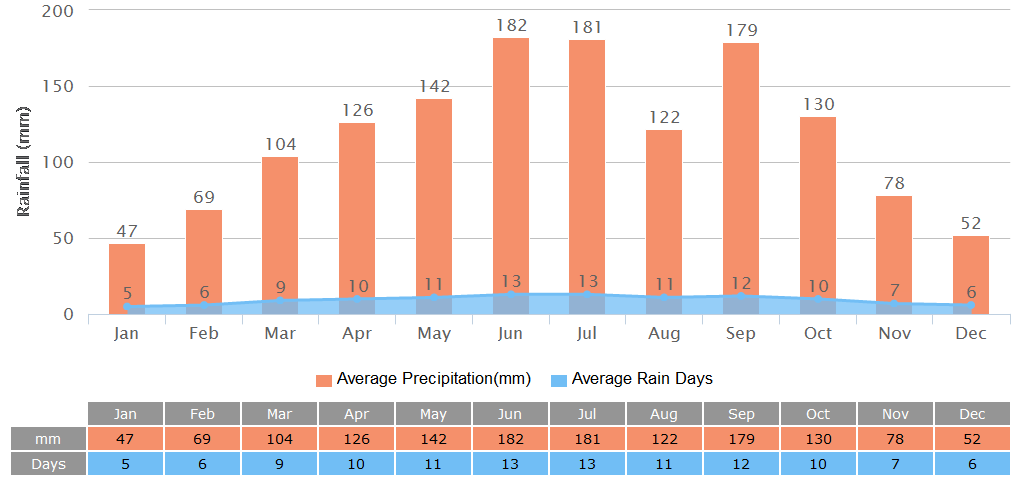
Note that Nara experiences the plum rainy season from early June to late July. From August to October, especially in early September, typhoons may strike the region.

Temperature
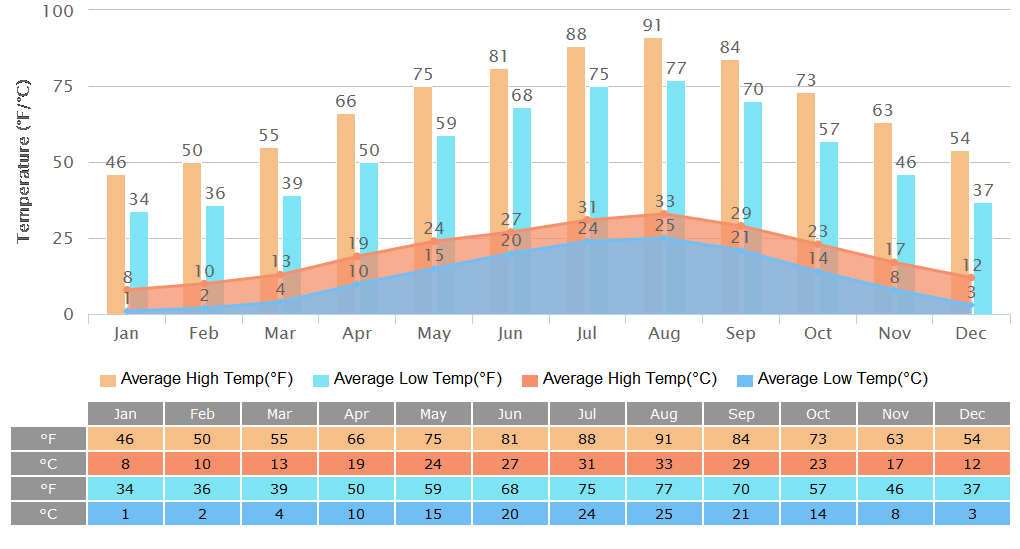
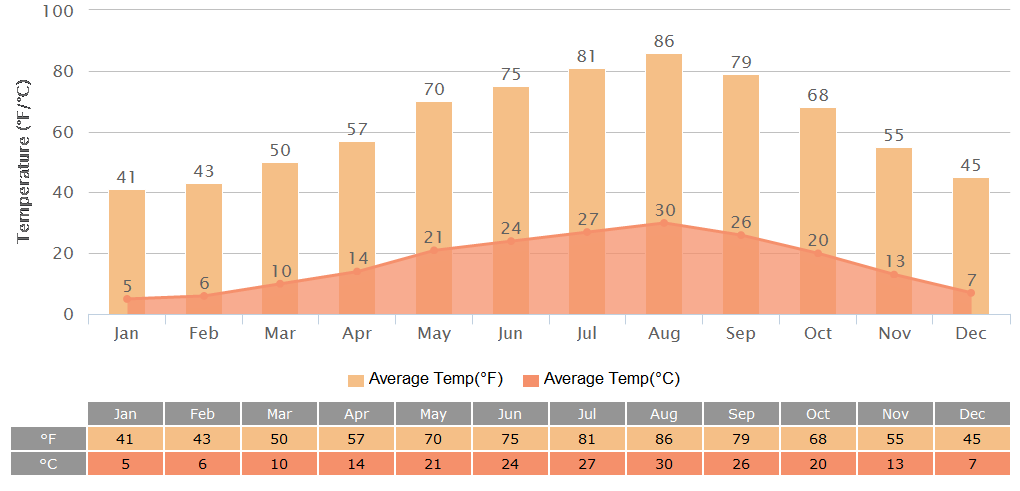
Nara is situated in the Nara Basin, and the basin effect causes significant seasonal temperature variations. Overall, the highest temperatures range from approximately 8-38 degrees Celsius (46-100 degrees Fahrenheit), while the lowest temperatures are typically in the range of 0-28°C (32-82°F). Winters are mild and generally don’t see extremely cold weather, but summers feature prolonged periods of high heat. Additionally, Nara experiences considerable daily temperature fluctuations, particularly in spring and autumn, which sometimes reach 10 to 15°C (18-27°F).
|
|
|
The Coldest Month in Nara
January is the coldest month in Nara. During this period, the city experiences daily high temperatures of around 4-13°C (39-55°F). Nighttime lows typically range from 0-6°C (32-43°F), occasionally even reaching around 10°C (50°F). In some years, Nara may experience one or two days in January where temperatures dip below freezing, while other years see no sub-zero temperatures at all.
The Hottest Month in Nara
August sees Nara’s highest temperature of the year. During this month, daytime temperatures in Nara rarely dip below 30°C (86°F), but typically range between 31°C (88°F) and 38°C (100°F). Nighttime temperatures also remain relatively high, generally hovering around 22°C (72°F) to 27°C (81°F). Throughout this period, the weather is almost always hot.
Precipitation
Nara receives an annual precipitation total of approximately 1,400 mm, placing it among the relatively drier areas of the Kansai region, which includes Kyoto and Osaka. Precipitation distribution is uneven, mainly concentrated during the rainy season and typhoon season, while winter and spring see less rainfall. As for precipitation forms, rain is the predominant form, and snow only occasionally occurs during winter.
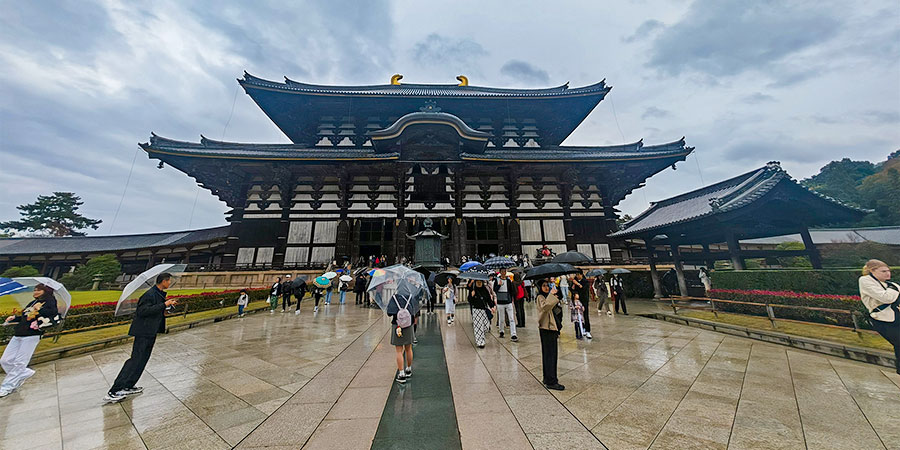
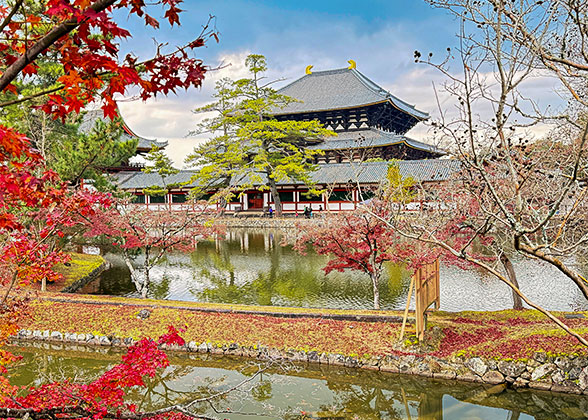
Todaiji Temple on Rainy Days
|
The Rainy Season in Nara
Generally, the rainy season in Nara falls in early June each year and ends around late July, lasting approximately six weeks. These two months mark Nara’s wettest period of the year, with average monthly rainfall exceeding 180 mm and rainy days of around 13. During the rainy season, Nara experiences frequent periods of persistent overcast skies and intermittent showers.
Read More: Everything You Need to Know about Rainy Season in Japan
The Typhoon Season in Nara
Nara’s typhoon season generally spans August to October each year. Early September marks the peak period. Consequently, among these three months, September records the highest precipitation at 179 mm on average, while the other two months experience moderate rainfall of approximately 120-130 mm.
On the more fortunate side, Nara is not coastal and rarely experiences direct typhoon impacts. During typhoon passages, the city experiences significantly lower wind speeds and precipitation intensity compared to coastal cities like Osaka and Kobe. Specifically, if a typhoon approaches, the city may experience 1-2 days of intense but relatively short-duration rainfall accompanied by gusty winds.
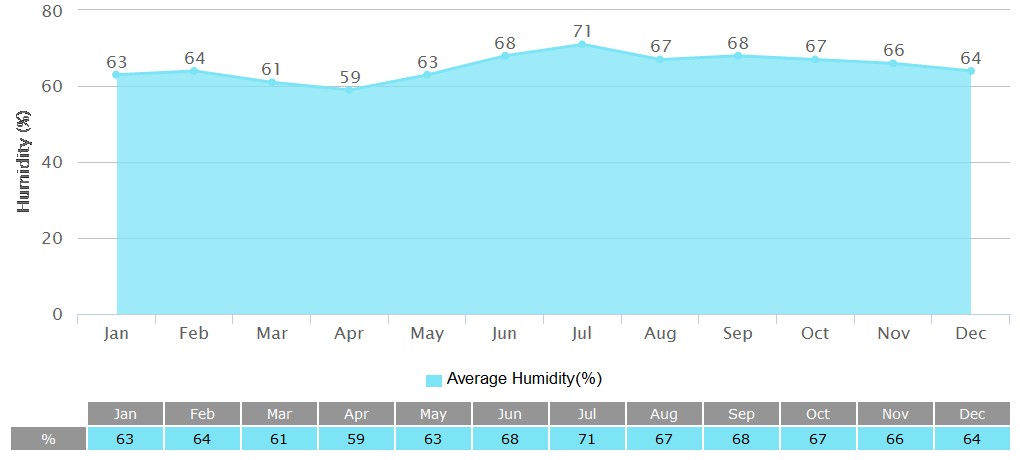
Humidity
The rainy season and typhoon season, from June to October, are the times with higher humidity in Nara, when the average monthly humidity exceeds 65% and even surpasses 70%. Spring and winter, on the other hand, are drier periods.
Best Time to Visit Nara
Considering Nara’s climate and scenery, the best times to visit are March to May in spring and October to November in autumn.
 Climate: From March to May, Nara gradually sheds winter’s chill and grows increasingly warm. While spring showers do occur during this period, precipitation remains moderate and won’t hinder travel. By October to November, Nara’s typhoon season winds down, and the weather is cool and sunny overall, ideal for outdoor activities.
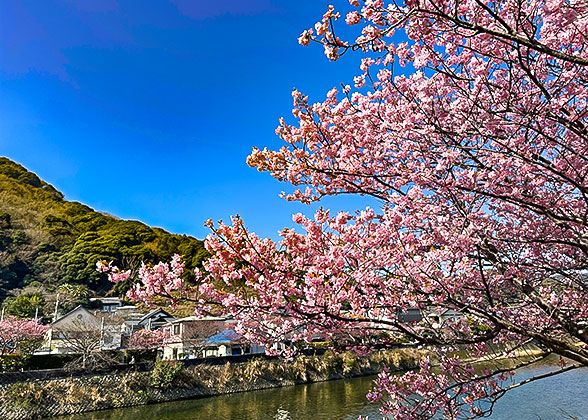
Scenery: From March to May, vegetation gradually turns green and flowers bloom in vibrant colors. The most captivating sight is the delicate pale pink cherry blossoms swaying gently in the breeze. From October to November, leaves shift from vibrant green to golden yellow or red, forming a marvelous scenery.
If you are planning to visit Nara during these periods in 2026, our Japan Tours 2026 with Private & Group Packages would be helpful.
Read more: Best Time to Visit Japan & Japan Weather
|
|
|
Nara Climate- Seasons & Travel Advice
Spring from March to May: Warm & Pleasant
Spring brings rapid temperature rises in Nara. In early March, temperatures may still hover between 5-10°C (41-50°F), but by month’s end, they typically reach 10-20°C (50-68°F). April and May see daily high of around 20-25°C (68-77°F), though occasional temperature dips may occur. These temperature drops are usually brought about by rainfall. Fortunately, Nara experiences infrequent rain during this season, with 10 rainy days per month on average. However, it’s important to note that the daily temperature variation in Nara is significant in spring, often exceeding 10°C (18°F). In this warm climate, various flowers bloom, including cherry blossoms, attracting numerous visitors.
Read more: Cherry Blossom Season in Japan; Japan Cherry Blossom Dates Forecast in 2026
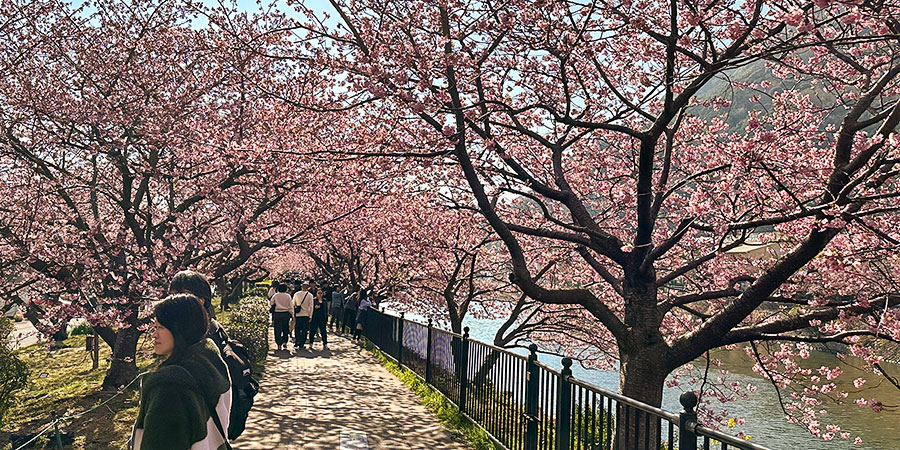
Beautiful Cherry Blossoms
|
What to Bring:Sweaters and long-sleeved T-shirts are suitable base layers for early and late spring respectively, while a trench coat is recommended as an outer layer. Jeans and sweatpants are both appropriate bottoms. For footwear, pack comfortable and breathable sneakers.
Travel Advice:1. During this season of cherry blossoms, you can visit Nara Park to admire the flowers and feed the deer. Alternatively, Kasuga Taisha Shrine and Mount Yoshino are also excellent spots for cherry blossom viewing. You can also experience traditional Japanese clothing, the kimono, and take photos under the sakura trees.
2. Besides cherry blossoms, you can also see wisteria flowers at Manyo Botanical Garden in Kasuga Taisha Shrine.
3. Every year from March 1st to 14th, Todaiji Temple holds the Water-Drawing Ceremony, during which the lighting of torches is the ceremony’s climax.
4. Spring, especially the peak cherry blossom month of April, Nara will see numerous visitors, making it essential to book hotels and air tickets in advance.
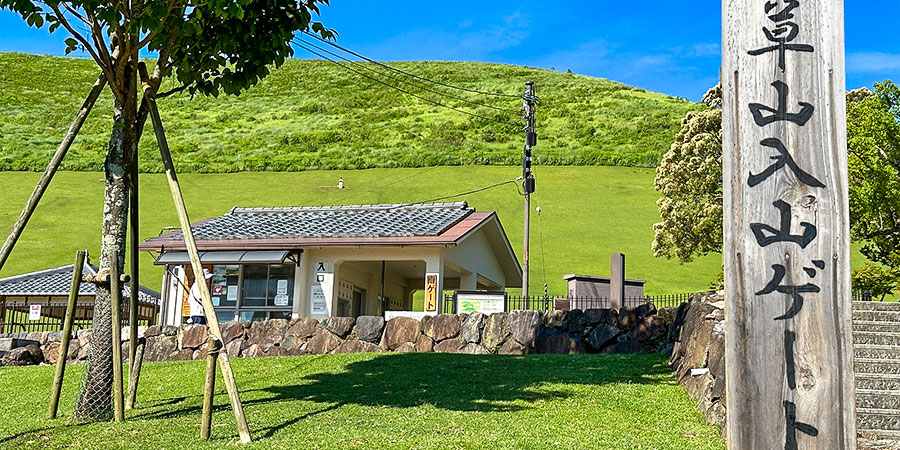
Vibrant Mountain Wakakusa
|
Summer from June to August: Hot & Rainy
Nara weather in summer is actually not ideal for sightseeing. First, the temperature is quite high during this season. In June, the daily high typically ranges from 25 to 30°C (77-86°F). By July and August, this figure rises to around 30-35°C (86-95°F), occasionally even reaching 38°C (100°F). Second, June and July mark Nara’s rainy season, characterized by frequent rain; August brings typhoon season, with heavy downpours possible at any time. The high rainfall during this period further increases humidity, creating an oppressively sticky and muggy atmosphere. However, the scenery is beautiful with lush grasslands and trees. What to Bring: Opt for lightweight, breathable, and quick-drying summer clothing like tank tops, short-sleeved T-shirts, shorts, skirts, and thin long pants to stay cool and comfortable. Considering that rainfall can sometimes bring cooler temperatures, pack one or two lightweight jackets. As for shoes, prepare flat and slip-resistant sneakers or sandals. Since rain can arrive unexpectedly, remember to carry an umbrella with you at all times. High-SPF sunscreen, sunglasses, and a sun hat are essential for sunny days.
Travel Advice: 1. Nara Park is best visited on sunny days, as this allows you to interact with the deer outdoors. Kasuga Taisha Shrine and Todaiji Temple are also excellent choices on days with light rain, when they feel more serene and solemn. If encountering moderate or heavy rain, indoor venues like the Nara National Museum are more recommended.
2. During the exceptionally hot and humid months of July and August, plan outdoor activities for morning or late afternoon hours to avoid the peak heat between 11:00 and 15:00.
Autumn from September to November: Cool & Fresh
The autumn starts in September, when you may still feel a little hot and typhoon weather accompanied by strong wind and high-intensity rain is still of high possibility. However, after September, the weather grows increasingly cool, and the typhoon season gradually comes to an end, bringing stable and mostly sunny conditions. Humidity also remains at relatively comfortable levels. In short, October and November offer the most pleasant weather in Nara throughout the year. Additionally, starting in late October, Nara begins to showcase its autumn foliage.
Read more: Japan Fall Foliage Forecast in 2026
What to Bring:
For a trip to Nara over these three months, you will likely need completely different clothing. In September, short-sleeved T-shirts, lightweight pants, and sun-protective jackets make for a suitable outfit. For October, you are recommended to bring long-sleeved T-shirts with jeans, plus light jackets for evenings. By November, thin sweaters and hoodies are appropriate, and it’s best to pack both a trench coat and an overcoat.
Travel Advice:
1. Late November is the prime time for viewing autumn foliage, with popular spots including Nara Park, Hasedera Temple, and Todaiji Temple. Keep in mind that this is also when Nara gets crowded, so be sure to make related reservations in advance.
2. The Uneme Festival will be held in Uneme Shrine in autumn to commemorate the imperial concubine favored by the Emperor and pray for peace and health., when you have a chance to see a costumed procession and a decorative boat.
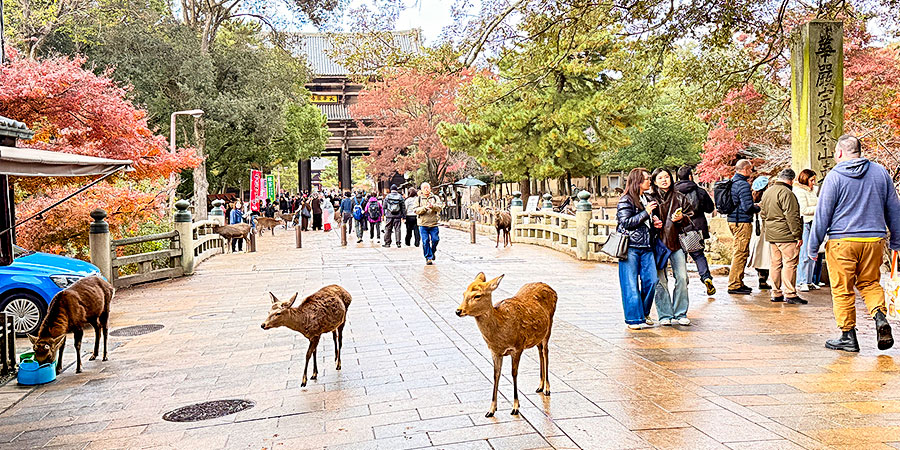
Lovely Autumn Scene in Nara
|
Winter from December to February: Cold & Dry
Nara climate in winter is a little cold, with daytime temperatures between 5-15°C (41-59°F) and nighttime temperatures between 0-10°C (32-50°F). This season is also the driest one in Nara, with an average of only 5 to 6 days of precipitation per month. As for the form of precipitation, it is unpredictable: some years bring snow, adding a unique charm to the ancient capital; other years, however, may pass without a single flake throughout the entire winter. What to Bring: Padded overcoats and woolen overcoats are necessary. Considering most of the indoor places have central heating systems, thin sweaters, hoodies, or long-sleeved T-shirts plus knitwear are suitable clothes for the inner layer. Long johns are needed underneath the jeans or sweatpants. For shoes, thick sneakers or comfortable boots are recommended. Hats and scarves can also be prepared if you are sensitive to the cold.
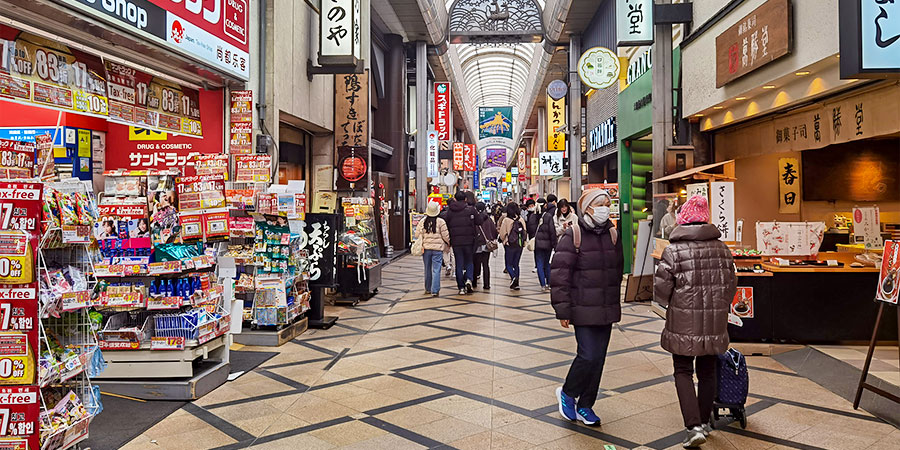
Cold Winter
|
Travel Advice: 1. You still have a chance to see red leaves in winter, but only in early December.
2. You can admire “Winter Deer Gathering” at 10:00 on every weekend and public holiday. You may want to know that in winter, there are no signature white spots in these lovely deer – their fur turns gray or brown.
3. One of the best things to experience in winter is the hot spring bath.
4. Attractions such as Todaiji Temple shorten their opening hours during winter. From late December to mid-January, the Isuien Garden will close. Therefore, if you plan to visit quiet Nara in winter, remember to check the opening status and hours of attractions in advance